System architecture
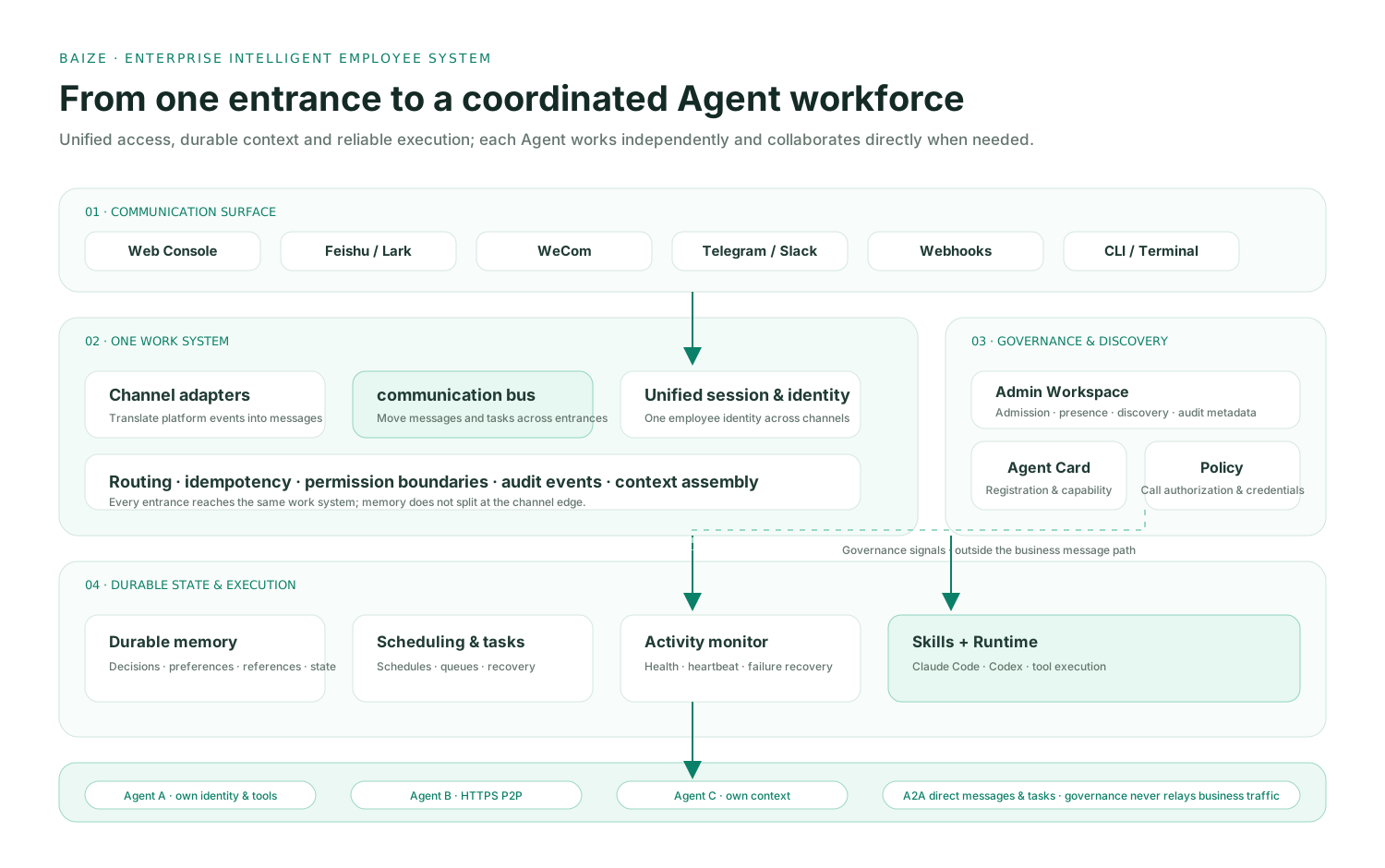
The architecture separates communication, durable work state, runtime execution and governance. This makes a single Baize instance useful on its own, while leaving a clear path to a coordinated Agent network.
Communication layer
Web Console, Feishu/Lark, WeCom and future connectors translate channel events into the same internal conversation model. The channel does not own memory or business state.
Work layer
The communication bus, scheduler, memory and activity monitors keep messages, tasks and context moving through one operational system. Persistent local state makes the system restartable and inspectable.
Runtime layer
Baize can run Claude Code, Codex or another compatible runtime behind the same employee identity. Skills and runtime adapters can evolve without changing the communication contract.
Governance layer
For commercial deployments, A2A provides direct Agent-to-Agent messaging and task delegation. Admin Workspace provides admission, presence, discovery and audit metadata. Business messages and task execution remain on the participating Agents.
Deployment modes
| Mode | Use case | Authorization |
|---|---|---|
| Single instance | One intelligent employee for a team or workspace | Free Baize Core |
| Agent network | Multiple independent Agents collaborating across roles or sites | Commercial A2A + Admin Workspace authorization |
Design principles
- One employee identity: every channel reaches the same working context.
- Local ownership: memory, credentials and execution remain under the operator's control.
- Direct collaboration: Agents communicate peer-to-peer when collaboration is enabled.
- Governance without relay: the control plane governs the network; it does not carry business traffic.